What Is Intermittent Fasting — And Why It Actually Works for Night Shift Workers
Working night shift and struggling to lose weight? Intermittent fasting works differently when your schedule is flipped — here's the eating window approach built for nurses, CNAs, and overnight healthcare workers who need real answers, not 9-to-5 advice.
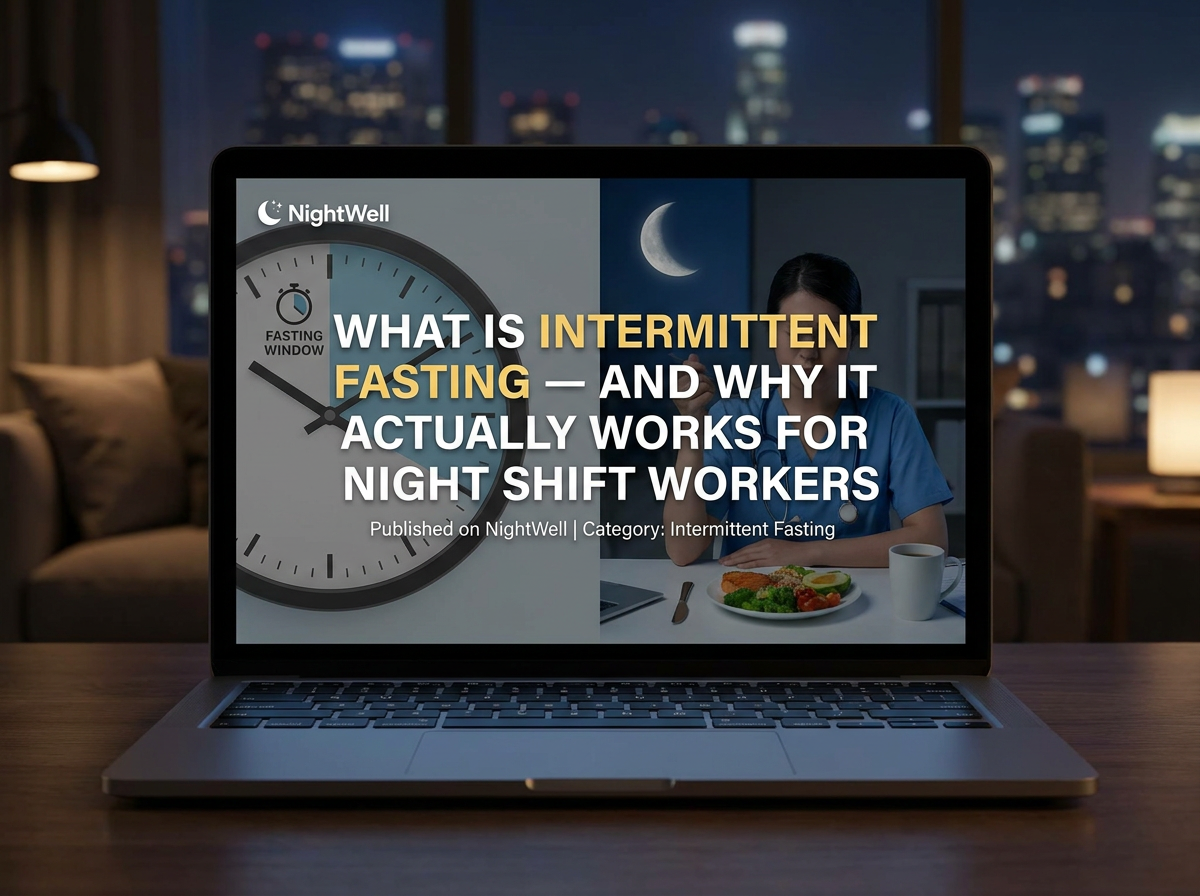
If you've ever Googled "how to lose weight on night shift," you already know the problem. Every result assumes you wake up at 7am, eat breakfast, go to the gym at lunch, and wind down by 9pm. None of it applies to you.
I know because I've been there. Working nights at a nursing home, I tried the diets, the programs, the calorie counting — and the weight kept creeping up anyway. Not because I wasn't trying. Because the advice wasn't built for my life.
Intermittent fasting was the first thing that actually worked. Not because it's magic — but because it's the one approach that doesn't care what time the clock says.
Here's what you actually need to know.
What Is Intermittent Fasting?
Intermittent fasting (IF) isn't a diet in the traditional sense. It doesn't tell you what to eat. It tells you when to eat — and more importantly, when to stop.
The core idea: you eat during a defined window of time each day, and fast the rest. Your body spends the fasting hours in a different metabolic state — lower insulin, more fat-burning, better cellular repair.
The most common approach is 16:8 — 16 hours fasting, 8 hours eating. But the window length isn't the point. The point is consistency and timing it around your body's real schedule, not the clock on the wall.
Why Standard IF Advice Doesn't Work for Night Shift
Most IF content tells you to eat between 12pm and 8pm. Stop eating at 8pm, sleep at 10pm, wake up and fast through the morning. Simple.
Except you're working at 12pm. Or sleeping. Or halfway through a 12-hour shift.
Here's the thing the wellness world doesn't tell you: your circadian rhythm is real, and it runs on your schedule, not the sun's. Your body's insulin response, cortisol curve, and digestion timing all shift based on when you're awake and active — not when it's dark outside.
That means:
Eating a big meal in the middle of your shift (at 3am) hits your body the way eating at midnight hits a 9-to-5 worker. Hard.
Generic "don't eat after 8pm" advice is useless — or actively harmful — if 8pm is the start of your workday.
Weight gain on night shift isn't just about calories. It's about eating at the wrong time for your shifted clock.
The Night Shift IF Approach That Actually Works
After trial and error — a lot of it — here's the framework I landed on, and what I now recommend through NightWell:
1. Anchor your eating window to your shift start, not the clock. The goal is to finish eating before the hardest part of the night, not before some arbitrary evening hour. For a 10pm–6am shift, that means eating your main meal in the afternoon (around 3pm), a small protein-based snack early in the shift (around 9–10pm), and nothing after midnight.
2. Keep your window to 8 hours or fewer. An 8-hour eating window gives you a 16-hour fast — enough to see real metabolic benefits without being so restrictive that you can't sustain it on a demanding physical job.
3. Your main meal goes before your shift, not during it. This is the biggest shift from generic IF advice. Eating your largest meal before you clock in — when your digestion is still working well and your insulin response is strongest — makes a real difference in how you feel and how your body processes the food.
4. During the fasting window: coffee + protein, nothing more. This is the trick that made it sustainable for me. A 16oz black coffee with half a Premier Protein shake stirred in gives you about 15 grams of protein and enough to sip through hours of rounds. It keeps hunger from spiking without breaking the fast in any meaningful way.
5. The eating window closes before midnight. Whatever your shift pattern, the research on night shift metabolism consistently points to the same finding: eating between 1am and 6am is harder on your body than eating at any other time. That's the window to protect.
What to Expect in the First Two Weeks
Be honest with yourself about this part, because most people quit before the adaptation is done.
Week 1: Hunger hits at the times you used to eat. You'll feel it around 2am if that was your old snack time. This is habit, not actual need. It passes.
Week 2: Energy starts to level out. The 3am crash gets less severe. You stop reaching for vending machine food not because you're being disciplined, but because you're genuinely not as hungry.
Week 3 onward: The window feels normal. Most people report that this is when the weight starts to visibly shift — but more importantly, the bloating that comes from eating heavy food at 2am goes away, and that alone feels like a significant change.
Is Intermittent Fasting Safe on Night Shift?
For most healthy adults, yes — with a few caveats worth mentioning:
If you have diabetes, hypoglycemia, or a history of disordered eating, talk to your doctor before starting any fasting approach. Blood sugar management on a fasting protocol on a night shift is a more complex picture.
If you're pregnant or breastfeeding, this is not the time for caloric restriction of any kind.
If you're on a physically demanding unit, make sure your protein intake during your eating window is adequate. CNA and nursing work is not a desk job — your muscles need fuel.
NightWell provides educational wellness guidance, not medical advice. Use the tools here as a starting point, and loop in your provider for anything specific to your health history.
Your Next Step
The best way to start is to use the NightWell Schedule Builder — enter your shift times and it'll calculate your eating window, main meal target, and coffee cutoff in under 60 seconds. No guesswork.
If you want the full breakdown of how I personally used IF to lose weight on a 10pm–6am nursing home shift, that story is in the blog post How Intermittent Fasting Fixed My Night Shift Weight Loss Struggle.
You didn't choose an easy schedule. But you can choose a plan that's actually built for it.
NightWell is built by a night shift worker, for night shift workers. All content is evidence-informed and reviewed for accuracy, but is not a substitute for professional medical advice. See our Medical Disclaimer.
Join the NightWell Newsletter
Night shift tips, healthy recipes, sleep advice, meal plans, and weekly wellness delivered to your inbox.
Comments
Be the first to comment.
Sign in to leave a comment.