Sleeping in a Loud House: How Night Shifters Can Block Out the Daytime World
"The hardest part of daytime sleep isn't the light — it's the noise. Here's how I stopped absorbing every daytime sound as an interruption, and what actually got my house to respect my sleep hours."
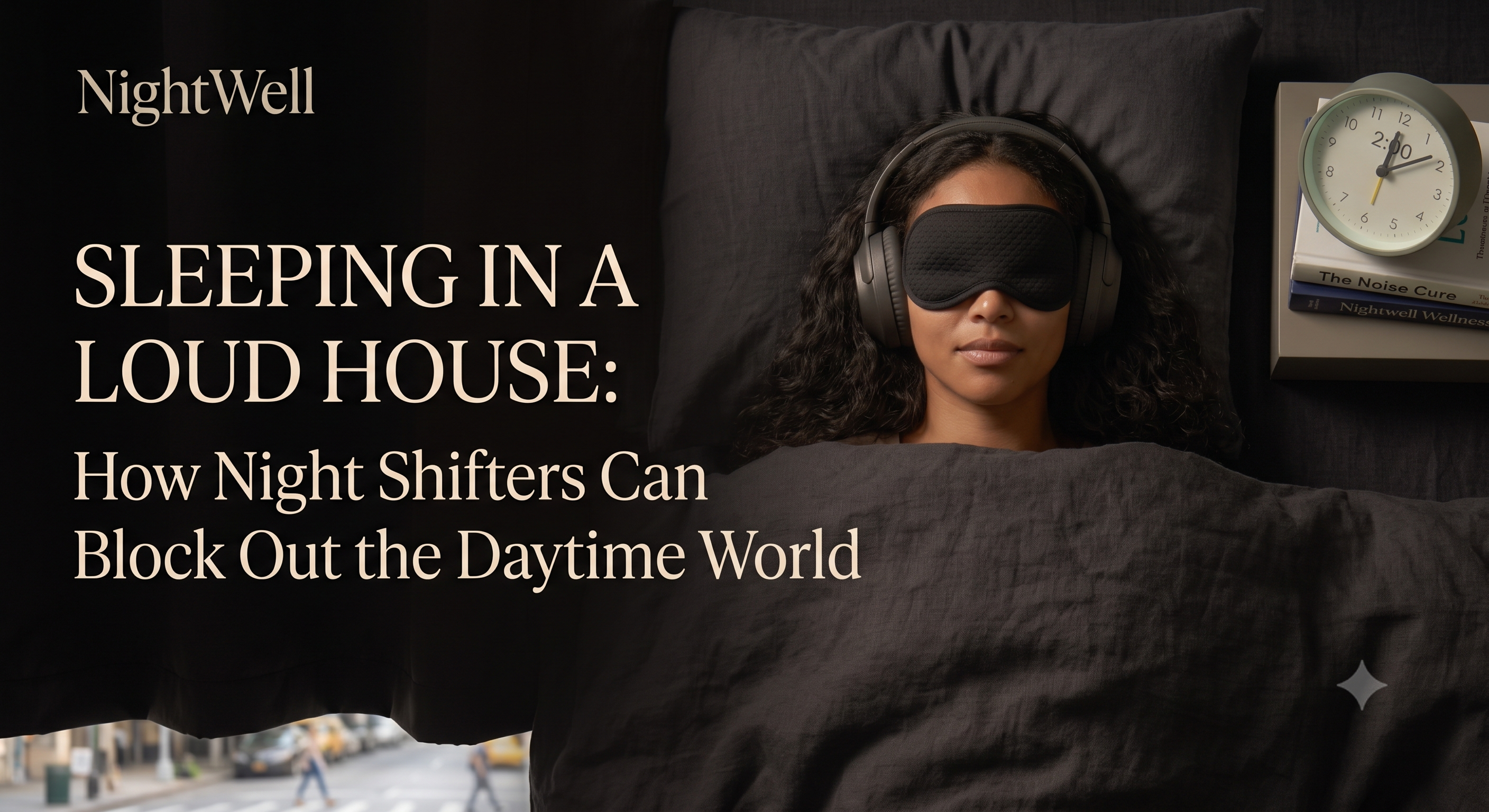
Sleeping in a Loud House: How Night Shifters Can Block Out the Daytime World
Nobody warns you that the hardest part of sleeping during the day isn't the light — it's the noise. I could black out my windows perfectly and still lie there at 10 AM listening to the garbage truck, a neighbor's lawn mower, kids playing outside, and my own household going through its normal daytime routine, none of which exists at 2 AM but all of which is in full swing exactly when I'm trying to sleep.
For a while I just accepted it as the cost of working nights — figured a loud house was something I had to tolerate, not something I could actually fix. It took some trial and error, and a few honest conversations with the people I live with, to get to a setup that actually works.
Start With a Real Conversation, Not Just Hoping People Notice
The single biggest shift for me wasn't a product — it was actually sitting down and explaining my sleep hours to the people in my house. I used to assume people would just naturally keep it down without me saying anything, and then feel resentful when they didn't, even though I'd never actually told them what I needed.
Once I started treating my sleep hours as something worth protecting out loud — not just something I hoped everyone would respect on their own — the noise around the house dropped without me having to fight for it every single day.
A simple door sign helps more than you'd think. Something as small as a "Sleeping — Night Shift Worker, Please Keep Quiet" sign on my bedroom door gives everyone in the house a visual reminder, including guests or delivery people who might otherwise knock or ring the bell without thinking twice.
Setting Boundaries With Kids Without Making Them Walk on Eggshells
If you've got kids, the goal isn't total silence — that's not realistic, and honestly it puts too much pressure on them to tiptoe around the house all day. What's worked better for me is designating certain hours and certain rooms as "loud is fine" zones, and being upfront that my door being closed means quiet voices nearby, not that they need to disappear into total silence for hours.
Giving them a simple way to check in matters too — a note or agreed-on signal for genuine emergencies, so they're not afraid to interrupt if something's actually wrong, but they also understand the difference between "I stubbed my toe" and "the house is on fire."
The Tools That Actually Made a Difference
Once the boundary conversation was in place, these are the tools that closed the rest of the gap:
A white or brown noise machine. I mentioned this in an earlier post, but it's worth repeating here — a steady, consistent sound running in your room masks a huge amount of outside noise, whether it's a lawn mower, traffic, or just household movement. Brown noise in particular worked better for me than white noise for hours-long daytime use.
A solid pair of foam earplugs, kept right on my nightstand for the days the noise machine alone isn't cutting it — a barking dog, a particularly loud delivery truck, whatever the day throws at me.
Noise-canceling headphones or earbuds, especially useful if I need noise blocked and want to play something calming at the same time, like a sleep story or soft music, instead of just silence.
A draft stopper under the bedroom door, which does double duty — it blocks light the way I mentioned in an earlier post, but it also dampens sound bleeding in from the hallway more than you'd expect from something so simple.
What This Actually Changed
The noise itself didn't disappear — the house is still a house, kids are still kids, neighbors still mow their lawns. What changed is that I stopped absorbing every sound as a personal interruption I had no control over. Between the boundary conversations and the right tools layered together, my daytime sleep finally started to feel protected instead of something I was constantly defending.
Want your sleep routine, noise setup, and schedule all mapped out together? I built a free Schedule Builder on NightWell to help you plan the whole picture around your actual shift times.
Join the NightWell Newsletter
Night shift tips, healthy recipes, sleep advice, meal plans, and weekly wellness delivered to your inbox.
Comments
Be the first to comment.
Sign in to leave a comment.